PCOD is a condition in which the ovaries contain elevated levels of androgens (male hormones), in particular testosterone resulting in high levels of luteinizing hormone (LH) and low levels of follicle-stimulating hormone (FSH), which prohibits follicles from developing mature eggs leading to anovulatory periods and irregular menstruation.
Polycystic ovary syndrome (PCOS) signs have a natural tendency to start progressively. Hormone shifts that intensify PCOS typically begin in the early young, after the first menstrual cycle. Indications can be more evident after gaining weight.
Hirsutism (excessive hair development, generally in a male pattern), growth is based on the body, the calf muscles, just below the big toe on the hips, the elbows, below the navel, in between breasts and even the moustache area. Sometimes even, too, heavy eyebrows and lips. Facial fur, and/or scalp thinning.
PCOS can be of two types
1. Symptomatic
2. Asymptomatic
(Where asymptomatic may or may not be the condition of PCOS)
Women with This condition have different hormonal processes than average women without PCOS. It changes your internal body mechanism of producing eggs and preparing your uterus for pregnancy.
Interpretations why women with PCOS are not pregnant or why it is impossible for them to sustain pregnancy are as follows: Most of the women who have PCOS do not ovulate naturally. They have unpredictable intervals and, thus, their monthly patterns are not predictable. Since they have irregular intervals, their endometrium cannot be prepared when the egg is released. As a result, it would not help to manage pregnancy.
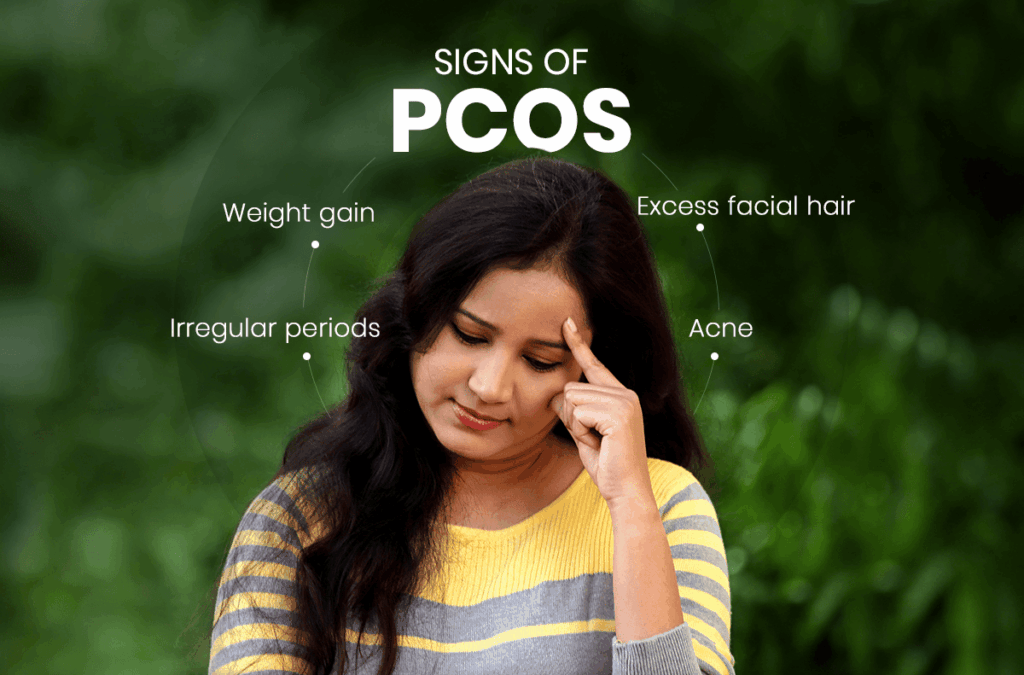
Periods irregularity: The absence of ovulation prevents a shedding of the uterine lining every month. Any women are less than eight years a year with PCOS. Severe bleeding: The lining of the uterus is thicker than average, meaning that the intervals will be longer than usual.
Growing hair: About 70 percent of these women, including back, belly and breast, develop hair on their faces and on their bodies. Hirsutism is referred to as excess hair formation. Acne: The skin can get higher than normal through male hormones, and break out in areas such as the face, chest and back.
Overweight: Up to 80% of females with PCOS are significantly overweight Male-pattern baldness: Skin is finer on the scalp and falls off.
Darkening of the skin: In body plugs as in the nose, on the groin, and under the breasts, dark patches of skin can occur.
Headaches: The variations in hormones in some women can cause headaches.
The exact reason of PCOS is unclear. Most experts agree that a variety of influences, including biology, have a part to play:
High Number of Androgens. Androgens are often referred to as male hormones, although all women make small levels of androgens. Androgens are regulating the development of male traits, such as male-pattern baldness. Higher than average amounts of androgen in women can prevent ovaries from producing an egg (ovulation) during every menstrual cycle and may trigger extra hair growth and acne, two indications of PCOS.
Primary treatments for PCOS include: lifestyle modifications and medications.
Goals of Ayurvedic treatment may be considered under four categories:
• Reduction of insulin resistance
• Restoring fertility
• Treatment of hirsutism or acne
• Restoration and prevention of endometrial hyperplasia and endometrial cancer.
Not every female with PCOS has difficulty getting pregnant. For those who do, anovulation or abnormal ovulation is a significant cause. Other factors include changed levels of gonadotropins, hyperandrogenaemia, as well as hyperinsulinemia. Like women without PCOS, women with ovulating PCOS may be infertile due to other causes, such as tubal. Ayurveda proposes a holistic approach to addressing PCOS. Personalized therapy helps to resolve the core cause of the condition and balance the body.
1. Ayurvedic detox body treatment
2. Strengthening and revitalizing the reproductive system of females
3. The reversal of hormonal imbalance
4. Addressing obesity and insulin resistance
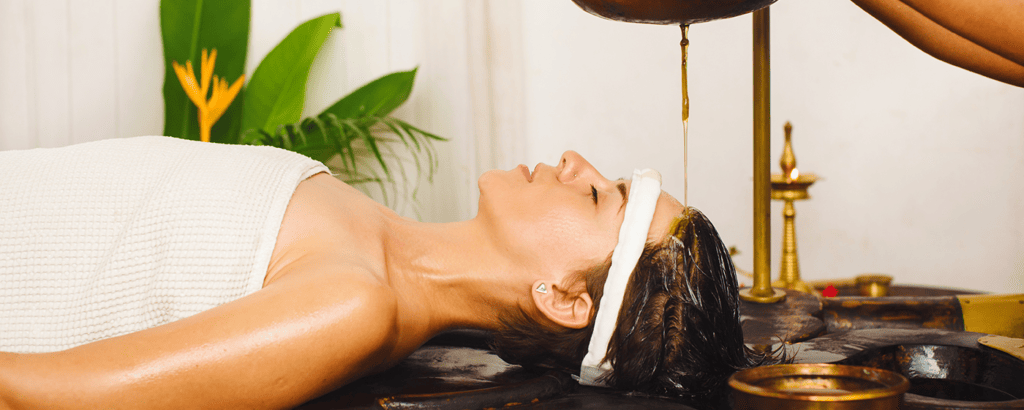
Panchakarma is the initial therapy line for PCOS in Ayurveda. After a comprehensive evaluation, the ayurvedic specialist develops a tailored plan. Panchakarma manages the root cause by eliminating toxins from the reproductive system.
The Panchakarma treatment in Kerala therapy of Ayurveda provides a clear response to the rising problem of PCOS in the modern era. Therapy with panchakarma gives power to the sexual bodies such as the uterus, ovaries, Fallopian tubes, female vagina & male testis. The hormone equilibrium is preserved by panchakarma
1. Basti (Vasti):
Enema of herbal oil or Decoction is delivered via Rectum. Vitiated “Vata” can cause a number of health problems. Basti releases blockages in the way of Vata Dosha and thus controls the natural “Vata” phenomenon. For treatment with Basti, various types of herbal oils, Ghruta, milk or decoctions are used. Miracles may arise if they are treated correctly with suitable medications. The Basti treatment removes the dosage from the rectum. It balances the Dosha of the “Vata.” Apana Vayu is the type of “Vata Dosha” that controls Shukra Dhatu (Semen) in males and Aartava (Ovum) in females. ‘Apana Vayu’ regulates the reproductive system. In females, “Sahacharadi oil Basti increases the consistency of ovulation within regular days. In males, the Basti treatment increases the consistency and volume of semen, i.e., improves overall sperm count and motility of semen.
Benefits of Basti
• Reduces Female Infertility = Irregular Menses, Hormone Unbalance, Dysmenorrhea, PCOD, Fallopian Tubal Block.
2. Uttarbasti (Vasti):
Uttarbasti (Vasti) seems to be the most effective therapy for gynecological conditions. Because of its resulting effects on the uterus and ovaries, it dissolves the cyst in the ovaries more efficiently than oral medications. Also, it helps to purify and flush the Aartava Vaha Srotas, pacifies the vitiated Apana Vayu, and increases follicular maturity.
3. Virechanam:
It extracts body contaminants as ‘Pitta’ vitiated. The washing process is done in the small intestine and in other parts of Pitta. In this case, medications that facilitate the passage of the intestine are improved for the elimination of doshas via the rectum. It’s working on a hormonal equilibrium like ‘Vaman Karma.’
4. Vamana:
Cleaning technique meant primarily for the expulsion of the vitiated ‘Kapha.’ This is a painless, drug-induced emetic process, done predominantly in Vasant Rhitu.
5. Fertility Massage:
A soft and strong massage of the lower abdomen in a particular pattern helps to maintain the natural functioning of the uterus. Fertility massage also decreases lower abdominal pressure and increases blood supply in the pelvis.
Ayurveda has the best drugs and treatment for PCOS which is specifically concerned towards fertility care that help to get pregnant naturally. Herbal drugs are very effective in the control of hormones. Panchakarma treatment is successful in detoxification of the body and correcting body for the further therapy or medications. After proper completion of the panchakarma protocol like uttar basti(vasti), it has been found that follicles split spontaneously without any hormonal injections. Further to panchakarma, special herbs and methods are used to add harmony and recovery to the female reproductive system. Ayurvedic medicines are high in phytoestrogen, which can significantly minimize inflammation and insulin resistance.
Ayurvedic medicines have consistently observed success in the reduction of ovarian volume. The better medicines for PCOS are herbal medicines such as Triphala, Kanchanar, Trikatu, Guggul, Dashamool, etc. These are effective in the treatment of PCOS. Many Ayurvedic herbs like Shatavari, Shatapushpa also helps to grow eggs naturally and helps to split follicles naturally. So we can say that only Ayurveda have solution of PCOS.